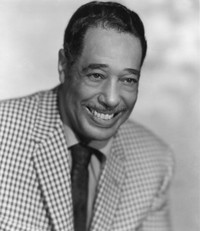
Duke Ellington
Registry record
- CopyrightID
-
0x27731e3bb4a0061f58c32a5ad2f4cc8897fee8e051c56d67ffeb59c458b22085
- EvidenceClass
-
chain-registered
- EvidenceClassStatement
-
This record has a CopyrightID on CopyrightChains and no confirmed Bitcoin attestation that verifies against this record, so no OTS fields are served. Verification establishes record integrity only. It says nothing about who made the work, who holds rights in it, or when it was made.
Edward Kennedy "Duke" Ellington (April 29, 1899 – May 24, 1974) was an American jazz pianist, composer, and leader of his eponymous jazz orchestra from 1924 through the rest of his life. Ralph J. Gleason called him "America's most important composer."
Born and raised in Washington, D.C., Ellington was based in New York City from the mid-1920s and gained a national profile through his orchestra's appearances at the Cotton Club in Harlem. A master at writing miniatures for the three-minute 78 rpm recording format, Ellington wrote or collaborated on more than one thousand compositions; his extensive body of work is the largest recorded personal jazz legacy, and many of his pieces have become standards. He also recorded songs written by his bandsmen, such as Juan Tizol's "Caravan", which brought a Spanish tinge to big band jazz.
At the end of the 1930s, Ellington began a nearly thirty-five-year collaboration with composer-arranger-pianist Billy Strayhorn, whom he called his writing and arranging companion. With Strayhorn, he composed multiple extended compositions, or suites, as well as many short pieces. For a few years at the beginning of Strayhorn's involvement, Ellington's orchestra featured bassist Jimmy Blanton and tenor saxophonist Ben Webster, and reached what many claim to be a creative peak for the group. Some years later following a low-profile period, an appearance by Ellington and his orchestra at the Newport Jazz Festival in July 1956 led to a major revival and regular world tours. Ellington recorded for most American record companies of his era, performed in and scored several films, and composed a handful of stage musicals.
Although a pivotal figure in the history of jazz, in the opinion of Gunther Schuller and Barry Kernfeld, "the most significant composer of the genre", Ellington himself embraced the phrase "beyond category", considering it a liberating principle, and referring to his music as part of the more general category of American Music. Ellington was known for his inventive use of the orchestra, or big band, as well as for his eloquence and charisma. He was awarded a posthumous Pulitzer Prize Special Award for music in 1999.
Similar Artists