Bernard Herrmann
Registry record
- CopyrightID
-
0x51c9ec86d43c9f019ee9522438cf3d9a3683d728cc2e274e487e91872e3937c8
- EvidenceClass
-
chain-registered
- EvidenceClassStatement
-
This record has a CopyrightID on CopyrightChains and no confirmed Bitcoin attestation that verifies against this record, so no OTS fields are served. Verification establishes record integrity only. It says nothing about who made the work, who holds rights in it, or when it was made.
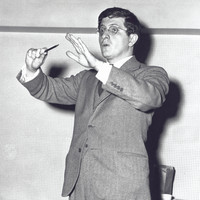
Bernard Herrmann (born Maximillian Herman; June 29, 1911 – December 24, 1975) was an American composer and conductor best known for his work in film scoring. He is widely regarded as one of the greatest film composers of all time. Alex Ross writes that "Over four decades, he revolutionized movie scoring by abandoning the illustrative musical techniques that dominated Hollywood in the 1930s and imposing his own peculiar harmonic and rhythmic vocabulary." As a conductor, he championed the music of lesser-known composers.
As a young man, Herrmann was the chief conductor of the CBS Symphony Orchestra, which led him to become the composer for Orson Welles's radio series The Mercury Theatre on the Air. This led him to write his first film score, for Welles's directorial debut Citizen Kane (1941). That year, he won the Academy Award for Best Original Score for The Devil and Daniel Webster. He worked with Welles on The Magnificent Ambersons (1942) and Jane Eyre (1943). He worked with Alfred Hitchcock on nine films, including The Man Who Knew Too Much (1956, where he makes a cameo appearance at the Royal Albert Hall), Vertigo (1958), North by Northwest (1959), Psycho (1960), The Birds (1963, as "sound consultant") and Marnie (1964).
His other credits include Anna and the King of Siam (1946), The Ghost and Mrs. Muir (1947), The Day the Earth Stood Still (1951), Cape Fear (1962), Fahrenheit 451 (1966) and Twisted Nerve (1968). He composed the scores for several fantasy films featuring the work of animator Ray Harryhausen and composed for television, including Have Gun – Will Travel and Rod Serling's The Twilight Zone. Towards the end of his career, Herrmann scored such Hitchcock-inspired films as François Truffaut's The Bride Wore Black (1968) and Brian De Palma's Sisters (1972) and Obsession (1976). His final score, recorded shortly before his death, was for Martin Scorsese's Taxi Driver (1976). His career is chronicled in Music for the Movies: Bernard Herrmann (1992).
Similar Artists